


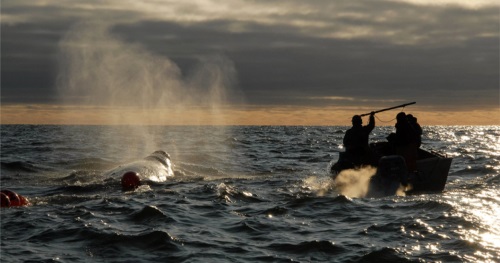
Specific features of the transfer of persistent toxic substances (РTS) across ecological trophic chains in the conditions of the Arctic tundra are considered. The concept of “dirty dozen” is discussed in relation to the most common РTS. The danger of РTS accumulation in tissues and organs of higher predators and humans for their health in the context of global warming is assessed. The concept of “health as a single unity” is proposed, aimed at preserving all links of the Arctic food web and, ultimately, improving the health and well-being of people.
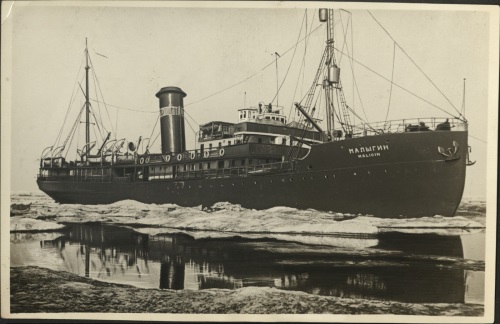
The present article continues a series of publications dedicated to students who entered the newly established Hydrographic Institute of the Northern Sea Route in 1935 and received diplomas as hydrographic engineers in 1938–1940. The article examines the educational and industrial practices of 1936–1938, during which student hydrographers acquired knowledge and experience of working in harsh Arctic conditions and took part in the work of the hydrographic directorate of the Northern Sea Route, including during the wintering of Sadko, Malygin and Georgy Sedov icebreaker steamships in 1937–1938.
This article presents a comprehensive analysis of the prospects for deep processing of baddeleyite concentrate from the Kovdor deposit (Russia), which is of importance in the context of the growing global scandium market. At present, the Russian rare metals industry is characterized by a paradox. On the one hand, the country enjoys significant scandium resources contained in various types of deposits and remains a supplier of raw materials to the global market. On the other hand, domestic production of scandium is limited. The conducted cost assessment of valuable components in baddeleyite concentrate based on current market data showed that the potential revenue from processing one ton of raw material could reach 1.62 million US dollars. Processing depth was found to be the key factor of economic efficiency, which creates a gap in the value of the final product of over one million US dollars per ton of concentrate. The strategic feasibility of establishing closed-loop technological cycles for processing baddeleyite concentrate in Russia is substantiated. This aligns with the development priorities of the Russian Arctic Zone in terms of ensuring technological sovereignty in the field of rare and rare-earth metals.
The current development of Russian economy requires the development of conceptual approaches to the use of foreign theories, their alignment with the new realities of economic development, and the construction of a national model of import substitution. The national model of development is determined by structural changes in the economy, providing an opportunity for the widespread use of material and financial resources in the formation of regional and sectoral models. The study of foreign theories allows the dynamics of regional development to be assessed. The classic models developed by foreign scholars are useful for analyzing and managing the economic situation in various regions of the country, as well as for identifying key growth factors and opportunities for improving the effectiveness of regional strategies. The application of these concepts in modern conditions facilitates consideration of new challenges and specific features of regional development. The analysis of foreign experience not only enriches the theoretical base, but also contributes to the practical implementation of managerial decisions by regional entities. The severe interference in the national economy and the imposition of large-scale sanctions by Western countries have had a significant impact on Russian economy and regional development. In these conditions, the classic theories of regional development are acquiring particular relevance.
Digitalization in the contemporary world has a significant impact on the economic development of regions, shaping new approaches to management, business and social sphere. For the Arctic regions of the Russian Federation, digitalization defines the sustainable development and ensure the livelihoods of the population. Digital space allows people to be connected without regard for physical space, making a wide range of social services accessible, which is especially relevant for Arctic regions. The present study aims to analyze the development of digital technologies in the Russian Federation, as well as to highlight the features and specifics of their application in the Arctic Zone of the Russian Federation.
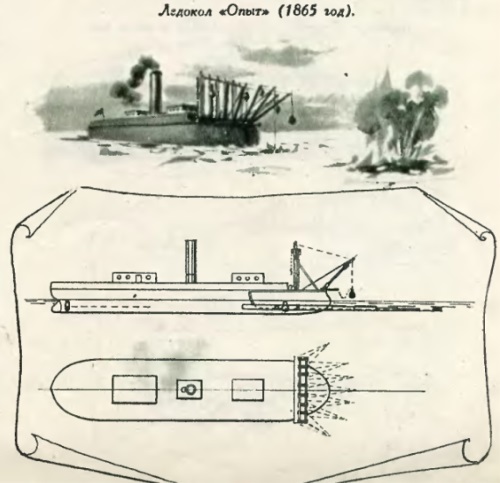
Recently, Professor M.V. Vinarsky drew attention to the existence of scientific memes, i.e., visual or verbal images that clearly identify a specific scientific theory or scientist in the public consciousness. He suggested that scientific memes can only appear for scientific events that are most important in terms of worldview. The present article shows that such memes can also exist in engineering sciences, for example in marine ice engineering. An example is the persistent belief that an icebreaker destroys the ice cover with its weight. The paper examines the possible causes of this “icebreaking” meme, as well as the reasons why the information it contains scarcely reflect real processes. At the end of the work, hypotheses are put forward about the possible reasons for the emergence of scientific memes. Moreover, the present probability of emergence for new scientific memes is concluded extremely low.
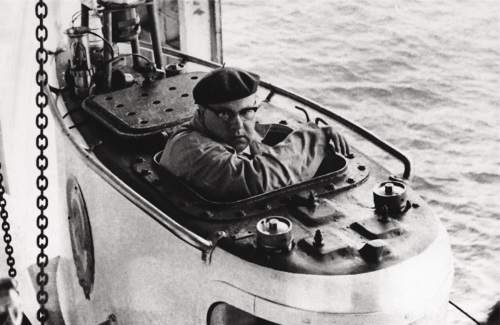
December 2024 have marked the 100th birth anniversary of A.P. Alekseev, a renowned Soviet and Russian oceanologist, former director of the Polar Research Institute of Marine Fisheries and Oceanography (PINRO) and secretary of the Interdepartmental Ichthyological Commission. A.P. Alekseev made a significant contribution to the development of commercial oceanography, organization of scientific, commercial and oceanographic research in the Northern fishing region, construction of research stations in the White and Barents Seas, as well as to holding of Conferences on Commercial Oceanography, Forecasting and the Resources of the White Sea. The article presents facts from the biography of A.P. Alekseev and some results of his contribution to the development of Russian oceanographic science.
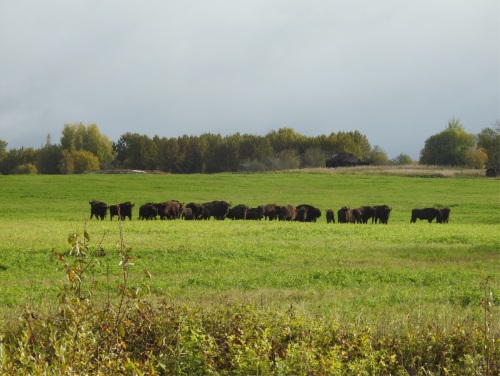
Most refuges of the European bison (Bison bonasus) are surrounded by developed areas with high human population density, which makes bison dispersal difficult or even impossible. However, the northernmost population of the species is an exception. It was established in 1991 in the Vologda Oblast, north of the bison’s historical range. This population is in good condition and continues to grow. One of the key factors behind this success is the presence of abandoned villages and the surrounding abandoned farmlands. These are — as provide suitable pastures for the bison — landscapes similar to those found further south. With ongoing rural depopulation, further increases in the numbers and range of the European bison in the North can be expected.


