


This article examines the theoretical and practical dimensions of implementing the corporate biodiversity conservation program of PJSC MMC “Norilsk Nickel” (hereafter, the Company), Russia, and the advantages of adopting a long-term planning horizon for ecosystem conservation activities in the Company’s regions of operation. The analysis focuses on the goals, objectives, and implementation mechanisms of the program, as well as the Company’s contribution to achieving the national strategic target “Environmental Well-Being”.
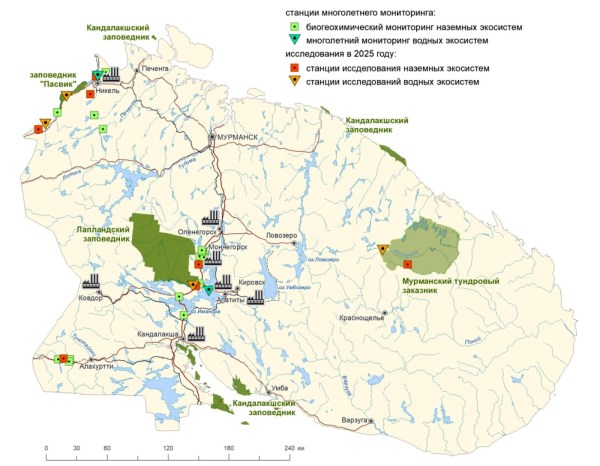
Rapid industrial development in the Arctic Zone of the Russian Federation, home to major mining and metallurgical operations, has intensified the need for systematic environmental monitoring. This article presents a unified ecosystem monitoring program developed for implementation in 2025–2027 across the Pasvik Nature Reserve, the Lapland Nature Reserve, and the Murmansk Tundra Reserve. The program follows internationally recognized biodiversity assessment frameworks and uses a hierarchical system of indicators, attributes, and variables. It covers key components of terrestrial and aquatic ecosystems, including vegetation, protected native species, invasive alien species, birds, mammals, and aquatic biota. A major focus is the harmonization of field and analytical protocols to ensure that data collected along gradients of industrial pollution are scientifically comparable and verifiable. The program provides a robust foundation for biodiversity conservation, reduction of anthropogenic impacts, and adaptive natural resource management in the Russian Arctic.
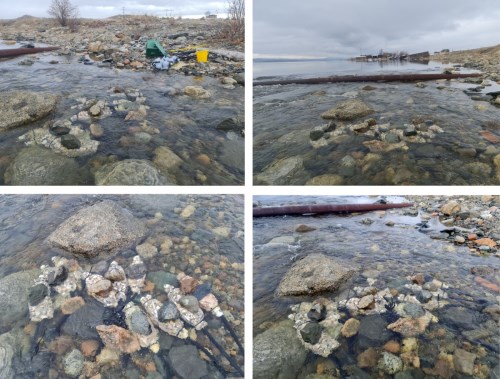
This study examines the use of a Salmo-3000 artificial nest incubator in brown trout reproduction technology. The pilot batch consisted of ten fully loaded devices. The testing was conducted in the Moncha River (White Sea basin). The reproduction technology involves catching mature female brown trout immediately before they spawn. The fish are held in cages until they are ready to spawn. Then, the eggs are obtained and transported to the plot where the proprietary Salmo-3000 nest incubators are installed. The devices are placed in the ground and the incubation process begins. After eight months, the nest incubators are removed, and a final evaluation is conducted to determine the effectiveness of the technology and the performance of the devices. The Salmo-3000 nest incubator allows for the incubation of fertilized brown trout eggs throughout the fall, winter, and spring, with a minimum operational life of eight months, and for the production of viable larvae in the summer (June), which either disperse independently into the river rapids or are manually removed from the devices for rearing in tanks. The test revealed an increased capacity for incubating eggs (up to 3,000 trout eggs per unit); an efficient water distributor; grids that prevent eggs from being washed away during loading; non-oxidizing fastening rods made of fiberglass reinforcement; a water intake/filter that effectively cleans and supplies water to the eggs. However, installing the device is complex and time-consuming, taking up to 30 minutes. The overall hatching efficiency of the larvae was 68–74 % at full capacity. Juvenile fish release into the river was 68–74 %. With some modifications, the device can be used to restore the population of trout (Salmo trutta L.) in Arctic rivers with complex hydrological regimes, where hatchery production is economically unfeasible for various reasons.
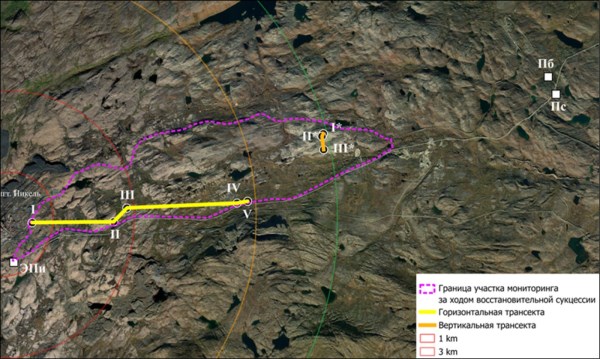
This paper presents an analytical review of research examining the influence of natural factors and land use history on landscapes affected by industrial activity in the Pechenga Municipal District of the Murmansk Region, Russia. The analysis draws on long-term ecological monitoring of industrial degradation and subsequent secondary succession in birch open woodlands and tundra ecosystems across the Nikel–Zapolyarny industrial area (2006–2025). Particular attention is given to the results of applying nature-based reclamation approaches in these severely disturbed Arctic environments. The paper also evaluates the feasibility of developing a method to accelerate successional recovery, while considering prospects for testing this approach at experimental sites established by Kola Mining and Metallurgical Company (Kola MMC).
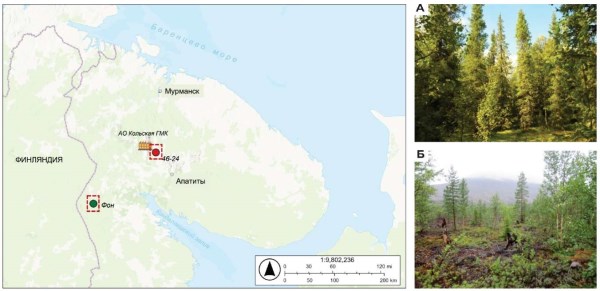
In Murmansk Region, Russia, researchers from the Institute of North Industrial Ecology Problems of the Kola Science Centre, Russian Academy of Sciences (INEP KSC RAS), together with JSC “Kola MMC”, conducted the first integrated assessment of terrestrial and aquatic ecosystems to evaluate their carbon sequestration capacity in the vicinity of metallurgical operations at the Monchegorsk site. During field campaigns in 2024–2025, new data were obtained on the composition of soils, waters, and bottom sediments in background areas and in areas affected by industrial activity. Analysis of these field data, combined with long-term monitoring records, indicates that the carbon sequestration potential of northern ecosystems, including those exposed to industrial emissions, has been systematically underestimated. Actual estimates were generated for carbon storage across major ecosystem components, including forest, freshwater, and peatland systems. The results will support improvements to the national monitoring system for climate-active substances and inform the planning of compensatory measures aimed at reducing atmospheric greenhouse gas concentrations. Continued research will enable more accurate assessments of the carbon sequestration potential of northern ecosystems and provide scientific and methodological guidance for ecosystem adaptation to climate change and for achieving regional carbon neutrality, including through nature-based climate projects.
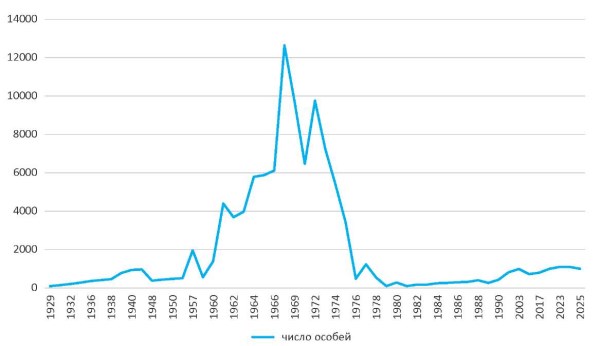
This study assesses the status of the western population of wild reindeer within the Lapland Nature Reserve (Murmansk Oblast, Russia) and adjacent areas. The aim was to clarify the conditions and current relevance of population recovery measures by analyzing the present state of the population, identifying limiting factors, and evaluating the effectiveness of existing monitoring approaches. The research combined aerial surveys with long-term records from the Chronicle of Nature of the Lapland Nature Reserve, photographic monitoring data, and official statistics on predator abundance. The findings support the development of regional biodiversity conservation programs, inform the planning of conservation interventions, and strengthen the wildlife monitoring system of the Murmansk Oblast.
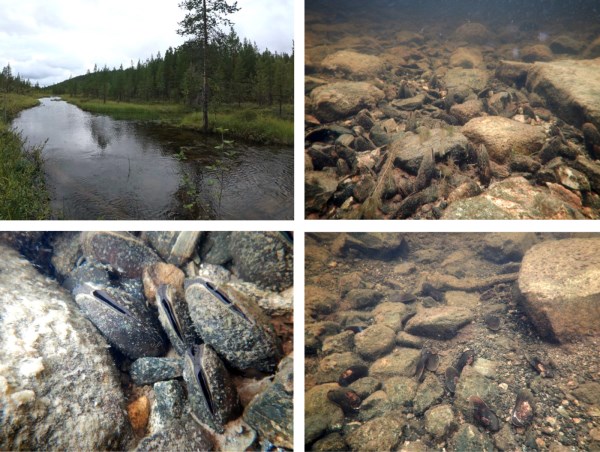
This article discusses the research findings on the testing of a technology for the reintroduction of the European pearl mussel in the Paz River basin. In 2024, 200 live pearl mussels were collected from a donor colony in the Mashjoki Stream, which had a high density of up to 100 individuals per square meter, and then transported to the Kaskamojoki Stream at the Pasvik Nature Reserve. A new European pearl mussel colony was established in areas with a high density of brown trout of various ages, which host the parasitic stage of pearl mussel larvae. Additionally, the results of the monitoring of the new pearl mussel colony are presented. The monitoring was conducted one winter later, in 2025. Mollusks were found to be in satisfactory condition; only one pearl mussel shell with mechanical damage was discovered, which was presumably caused by a moose crossing the stream. A parasitological analysis was conducted on juvenile brown trout inhabiting the areas where pearl mussels were released into the Kaskamojoki Stream; no glochidia were found on the gills of the brown trout.
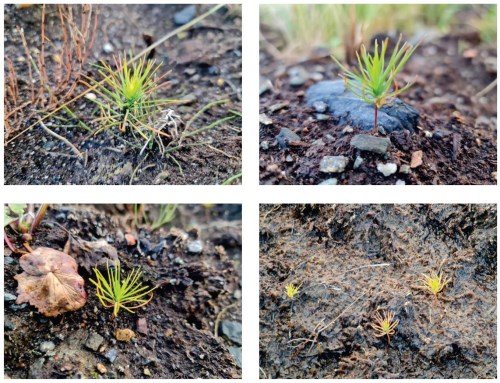
This article explores the use of a DJI Agras T10 unmanned aerial vehicle (UAV) for simulated aerial seeding in a reforestation technology. The testing took place in the Murmansk Region, with a focus on the area around the city of Monchegorsk and Kolskaya MMC JSC industrial site. The reforestation technology entails identifying areas requiring reforestation measures, designing a reforestation project, and harvesting seeds of the target tree species. Then, drones with a set sowing rate and granule spreading system are used to sow the tree seeds. Finally, the germination results of the seedlings are monitored. During the technology testing, 271.4 kg of regionalized Scots pine seeds and 2 kg of spruce seeds were harvested. These seeds were then sown across nine plots, covering a total area of 150.5 hectares with varying topography and soil types. The sowing plots were monitored, and the germination rate and survival rate of the seedlings were assessed throughout the planting season. The effectiveness and suitability of using a DJI Agras T10 model UAV for monitoring the plots was evaluated, and a methodology for operating the UAV was developed. Additionally, factors influencing the final germination rate and survival of seedlings were examined.


