


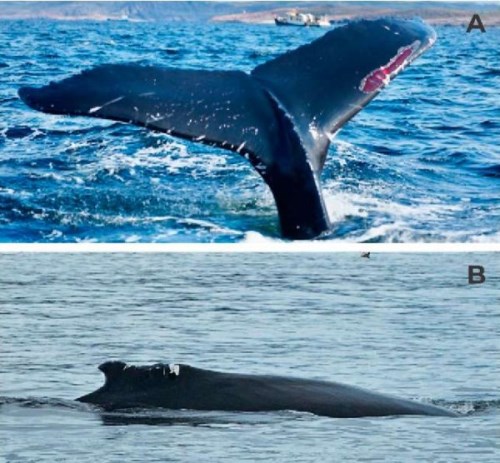
In this review article, we set out to assess the impact of tourism activity on the populations of marine mammals, seabirds, and aquatic birds in the coastal waters of the Murmansk Oblast of Russia. The negative effects of uncontrolled tourism are estimated and the respective regulating measures aimed at reducing the recreational load on animals are proposed. Particular attention is given to the physiological changes and behavioral responses of animals during peak tourism periods. The main effects of excessive recreational load are revealed, including changes in the spatial distribution of animals and their migration routes, violation of feeding behavior, and decreased reproductive potential. It is concluded that a systematic approach to effectively regulate tourism activities is needed. Among the proposed recommendations aimed at limiting the volume of recreational activity are setting minimum distances, restricting the time of interaction with animals, and controlling the number of vessels in the water area.

The Russian Arctic continental shelf and adjacent coastal zone is primarily regarded as a strategic base of hydrocarbon resources; at the same time, its mineral resource potential is not limited to oil and gas. This zone is also rich in commonly-occurring mineral resources, including construction materials such as sand and gravel, as well as their mixtures, which can be used in the implementation of infrastructure and sea-port development projects. However, under Arctic conditions, the extraction of such materials is associated with a high load on vulnerable marine and coastal ecosystems, characterized by low recovery rates. This requires accounting for the cumulative effect of anthropogenic actions. In comparison with hydrocarbon extraction, there is a lack of studies covering the environmental aspects of developing common mineral resources in the Arctic shelf. This determines the relevance of reviewing existing data and analyzing promising approaches to reducing negative environmental impact in this zone.
The Arctic region is experiencing an unprecedented transformation of its acoustic landscape due to the intensification of maritime shipping and industrial activity. This article presents an analysis of the scale and consequences of underwater noise pollution in the Arctic, including an assessment of anthropogenic noise growth rates, which doubled during the period of 2013–2019. Special attention is given to the unique vulnerability of Arctic marine mammals to acoustic disturbances, determined by their evolutionary adaptation to sound-oriented perception under conditions of limited illumination. The geographical distribution and spectral characteristics of anthropogenic noise are examined, demonstrating significant spatial and seasonal heterogeneity with concentration in areas of intensive shipping. Existing regulatory mechanisms are analyzed, including the updated guidelines of the International Maritime Organization from 2023. Significant gaps in the current regulation system are identified. Predictions are presented for an increase in median underwater noise levels of five decibels by 2030, which corresponds to nearly a fourfold increase in sound energy. A set of interdisciplinary strategies for managing noise pollution is proposed, including long-term acoustic monitoring, spatiallyoriented measures, and technological innovations in shipbuilding.

The archipelago of New Siberian Islands is an important breeding area for the Laptev subpopulation of polar bear, which remains one of the least studied in the Russian Arctic. Information on the number of dens established by breeding female polar bears is a significant parameter for estimating the size of the entire subpopulation, which has only rough expert estimates. Modeling potentially suitable maternal denning habitats is necessary for organizing censuses and subsequently estimating the number of breeding females on the archipelago, as well as for developing scientifically-based conservation proposals. An analysis of landscape features, weather conditions, and ice conditions in the archipelago of New Siberian Islands revealed that the largest area of suitable denning sites is located in the northern part of the archipelago (Kotelny Island, Novaya Sibir Island, and Belkovsky Island). Climate change is unlikely to have a significant negative impact on the availability of denning habitats for breeding female polar bears of the Laptev subpopulation in the coming years. However, global warming may negatively impact the well-being of female polar bears and their cubs due to reduced food availability, the spread of more southern pathogens, and increased time spent on land. The State Nature Reserve “Novosibirsk Islands” (Novosibirskiye Ostrova) does not encompass all the habitats most suitable for denning; therefore, the measures proposed in this article contribute to a more comprehensive polar bear conservation on the archipelago.

This article provides a brief review of materials presented at the 2nd Scientifi and Practical Conference “Timonov Readings”, held on December 12, 2025 at the Russian State Hydrometeorological University (St. Petersburg). The current directions and future trends in the development of oceanographic research in Russia, which is acquiring an increasingly pronounced “northern” orientation, are discussed.

In this article, we present the experience of cultivating Artemia salina, a gill-footed crustacean, in the aquatic complex of Murmansk Arctic University (Russia). Successful decapsulation of Artemia cysts was achieved, with a hatching rate of approximately 70%. On day 29, adult individuals with a maximum body length of 18 ± 1.8 mm were obtained; their egg sacs already contained developing cysts. The cultured Artemia were subsequently used as live feed for larvae of African clariid catfish and Nile tilapia during the early stages of their development.
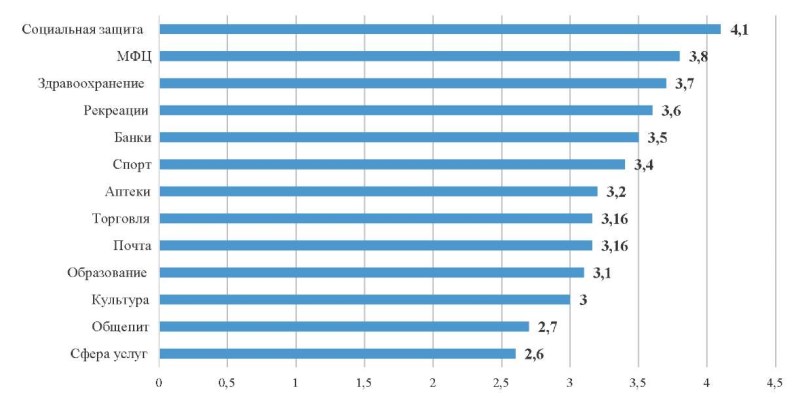
Factors affecting the spatial and individual mobility of people with disabilities in the Arctic region are studied. The main characteristics of mobility as a social phenomenon are analyzed both theoretically and empirically. Expert evaluations of the barriers to mobility faced by people with disabilities in the Murmansk Oblast of Russia are presented. The aim was to identify barriers to social mobility among people with disabilities in the Murmansk Oblast and determine measures of their elimination. As a result, the leading barrier to spatial and individual mobility was established to the poor-to-access environment. At the same time, the subjective attitude and personal characteristics of people with disabilities also play an important role, both facilitating and hindering their inclusion in social life. The results can be used when developing measures to eliminate social barriers for people with disabilities.
In this article, we set out to analyze the possibility of transforming the current system of university-based teacher training through the lens of convergence to make its orientation more forward-looking. The relevance of such changes is determined by the contemporary social context, characterized by increasing uncertainty due to rapid technological advances and the establishment of new interactions within the “human–technology” dyad. We treat the educational potential, encompassing intellectual, social, personal, and professional characteristics, as a goal-defining construct for the transformation of teacher training in modern universities, with convergent thinking proposed as its core. Directions of convergent transformations and corresponding practical solutions are presented, including changing traditional formats of teacher training from autonomous to collaborative; ensuring cross-disciplinary integration of content in both theoretical and practical training; and creating and implementing new forms of professionally driven cooperation, involving both horizontal and vertical mentorship in the development of team projects. The findings improve the current understanding of the heuristic and technological possibilities of the convergence concept. This creates favorable conditions for developing the educational potential of future teachers and forms a theoretical and applied basis for further exploration and implementation of innovative tools to improve the quality of university-based teacher training.


